





More than temporary retail
Luxury pop-ups are taking over China’s retail landscape. No longer reserved solely for selling new products, these activations have become central to how luxury brands connect with Chinese audiences. By combining retail, storytelling and cultural experiences, these limited-time spaces are evolving into powerful platforms for consumer interaction, digital visibility and brand discovery.
From Dior’s giant cake store in Nanjing to Givenchy’s breakfast pop-up in Shanghai, luxury houses are moving beyond traditional boutiques. These spaces are now creating shareable moments and prompting discussion across Chinese social media, helping brands win over consumers’ attention.
In the past, luxury brands could rely primarily on consumers valuing status and brand heritage. However, this has now shifted more towards cultural relevance and personalised, immersive-led luxury consumption.
While these short-term retail formats are not replacing traditional flagship stores, they offer a more flexible way to engage audiences, test new concepts and extend the retail experience beyond the point of sale. As a result, they now complement permanent retail in China’s fast-evolving luxury market, where experiential retail is playing a growing role in shaping how shoppers perceive and connect with luxury labels.
Why China's pop-up boom is growing
The rise of luxury pop-ups in China reflects a shift away from the old retail logic where ‘opening a store equals power’. Luxury brands no longer rely on permanent flagships as the main marker of prestige. They’re turning to pop-ups as the more agile way to remain visible and respond to changing demand in real time.
This shift is also tied to changing market conditions. Data from Bain & Company highlights that consumer confidence in China, which accounts for around a quarter of global luxury spending, was weakened by a property downturn and job insecurity, but is now rebounding. This has prompted many fashion houses to reassess their strategies in a market that remains central to global luxury growth.
Against this backdrop, these activations have become valuable strategic tools for luxury brands. China’s pop-up market reached RMB 832 billion (USD 115 billion) in 2025, marking a 260% increase in five years.
These formats offer brands the perfect solution by helping them maintain exclusivity while encouraging richer brand-consumer interactions. Since formats can be adapted to seasonal themes and changing consumer tastes, they extend their reach without sacrificing brand control. This also allows them to remain strategically flexible.
The new luxury pop-up playbook
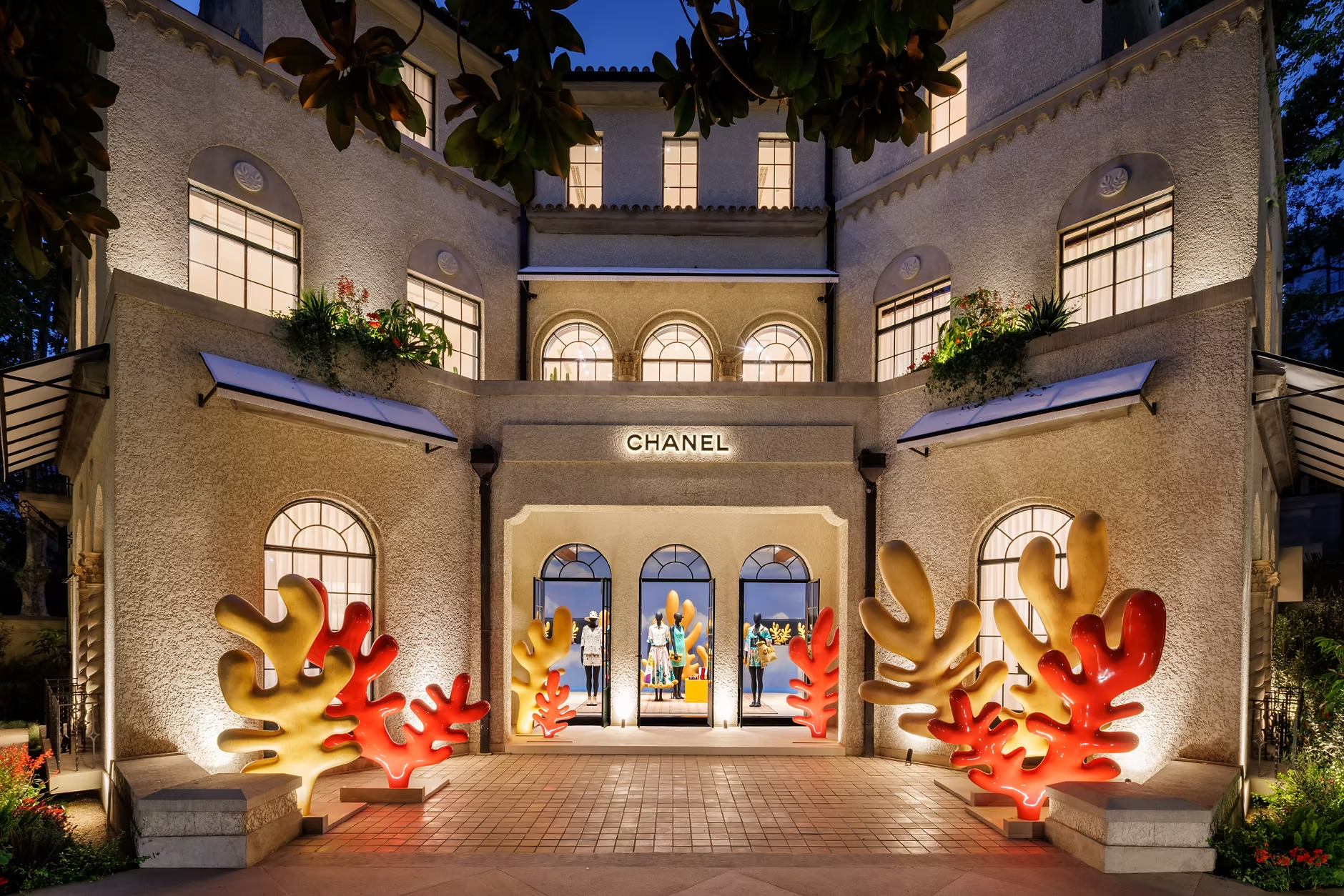
Take Wukong Road in Shanghai’s former French Concession as an example. Due to its popularity with Gen Z shoppers, it has become a hotspot for luxury pop-ups. Premium fashion brands like Louis Vuitton, Fendi, Lemaire, and Chanel, all launched pop-up stores in the area in the first half of 2026. Among them, Chanel’s Coco Beach demonstrates how limited-time retail can create immersive brand environments.
Drawing on coastal inspirations, it tapped into the growing appeal of ‘holiday aesthetics’ among high-end consumers. Visitors were guided through a curated, beach-themed environment designed to feel detached from the urban setting. The focus on immersion helped drive strong online attention, with engagement surpassing that of many permanent retail stores.
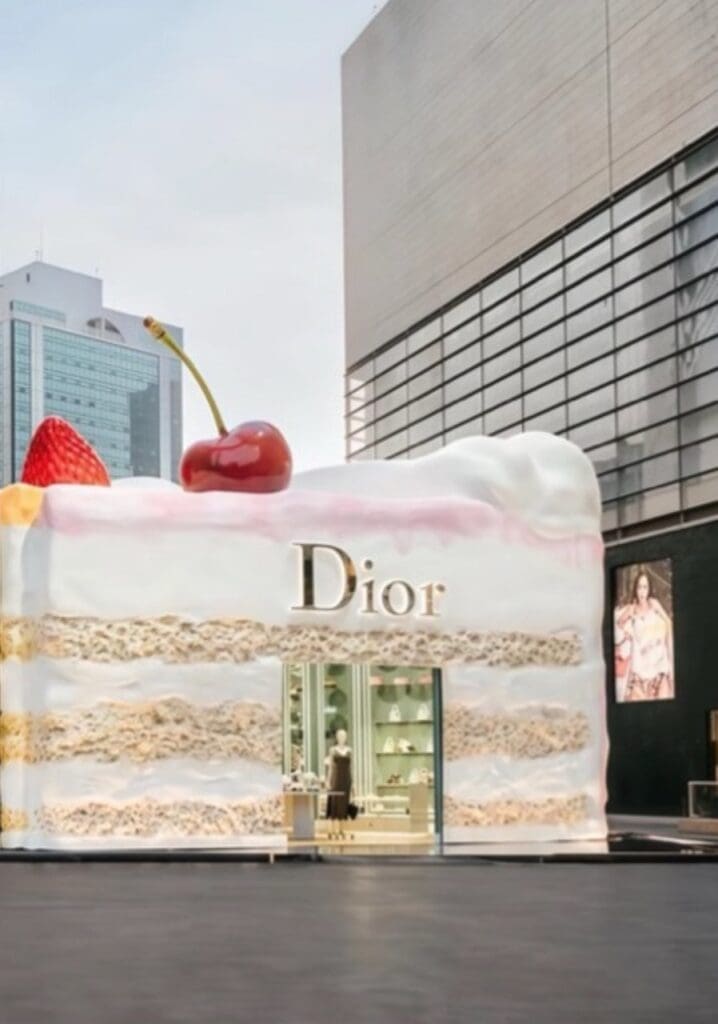
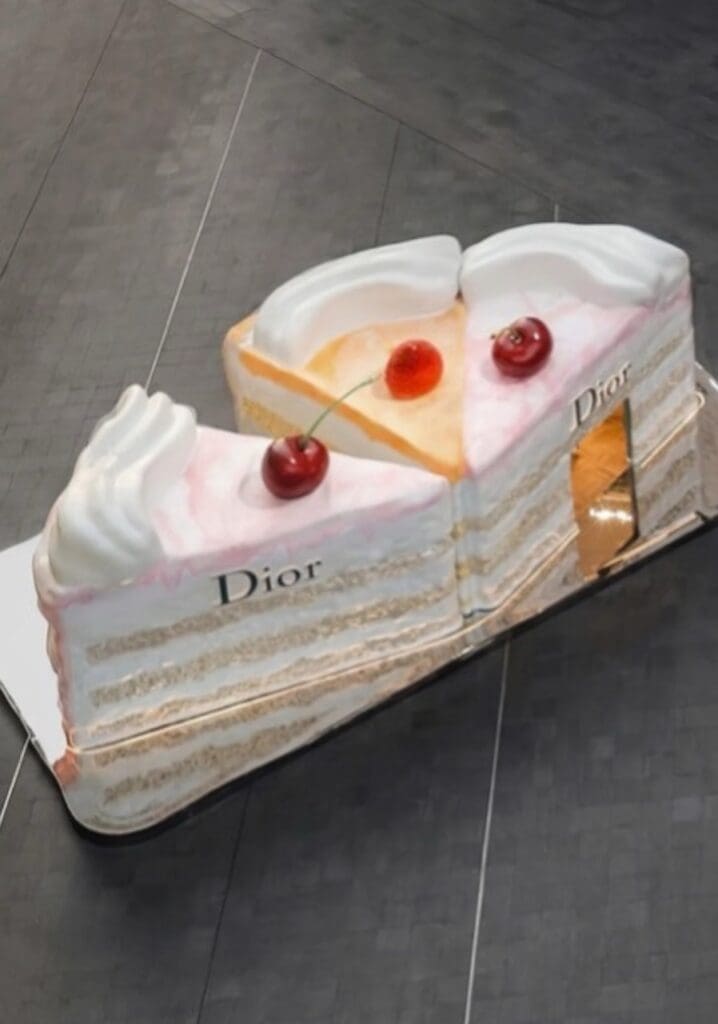
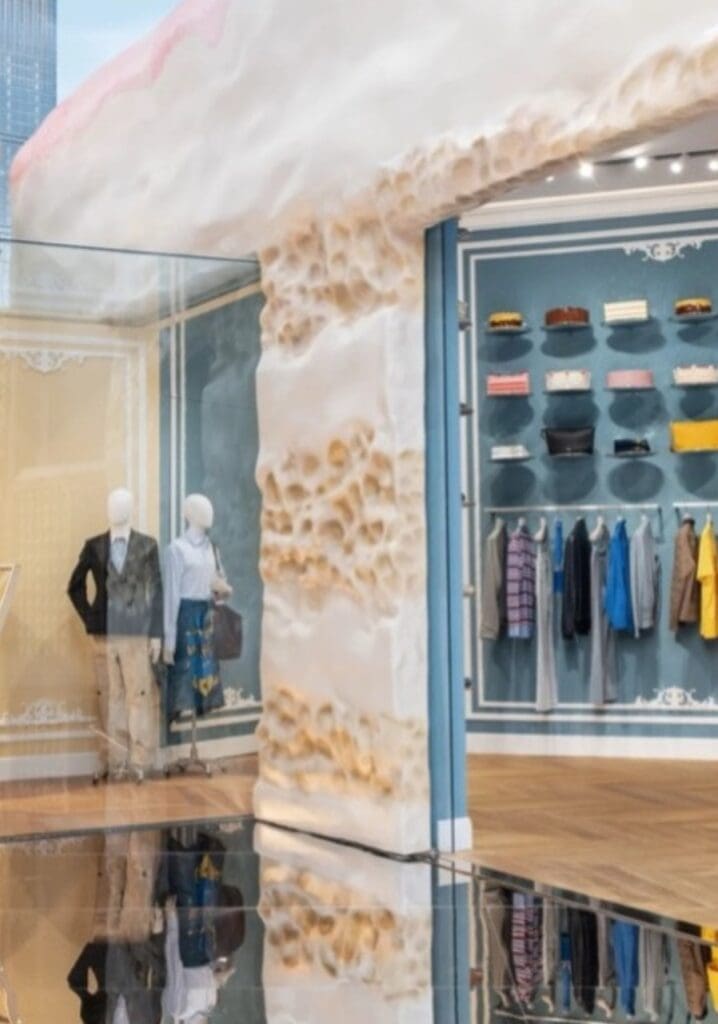
We can find other similar examples across China. In Nanjing, Dior launched its Autumn 2026 collection outside Deji Plaza, the country’s leading luxury mall. The Dior activation centred on a giant sliced-cake installation, which served as the main display for the collection. Products were inside the “cake,” while glass and ceramic cakes interior decor created a playful, patisserie-inspired setting.
Designed to drive online engagement, the pop-up store combined a prime location with a visually striking concept. Brand ambassadors and invited guests further expanded the campaign’s reach across platforms such as Xiaohongshu (XHS), also known as RedNote.
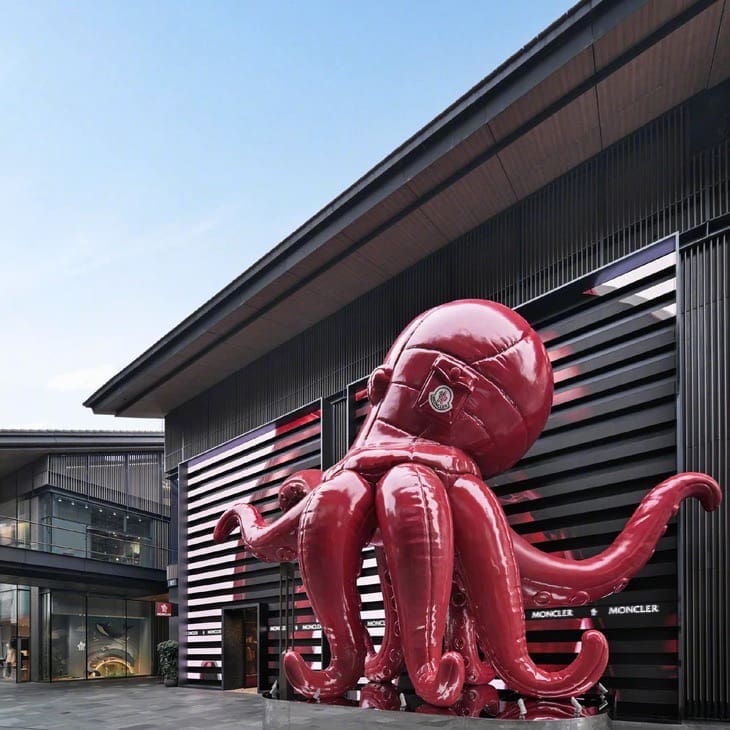
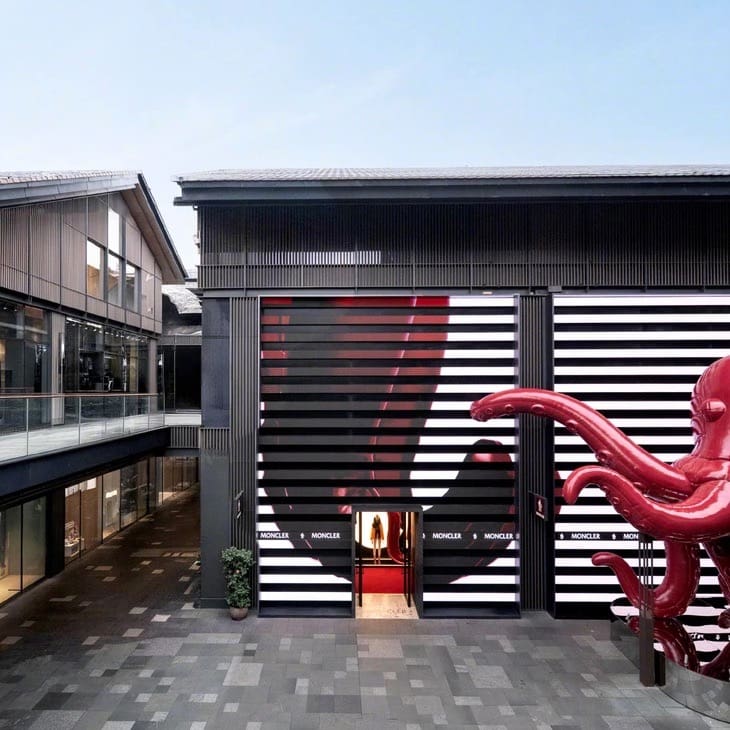
Giant spectacles were also seen in Chengdu through Moncler’s Puffy Summer campaign. Building on a concept first launched in Milan and Seoul, the brand installed a giant inflatable octopus at the entrance of its Taikoo Li flagship store, drawing visitors into an underwater-inspired environment. Marine-themed displays extended throughout the windows and interior spaces, bringing the Summer 2026 collection to life.
However, successful luxury pop-ups are not solely about showcasing products. Many brands are using them to strengthen local relevance and build meaningful connections through culturally tailored activations. A strong example is Givenchy’s Breakfast pop-up, which took a distinctly localised approach.
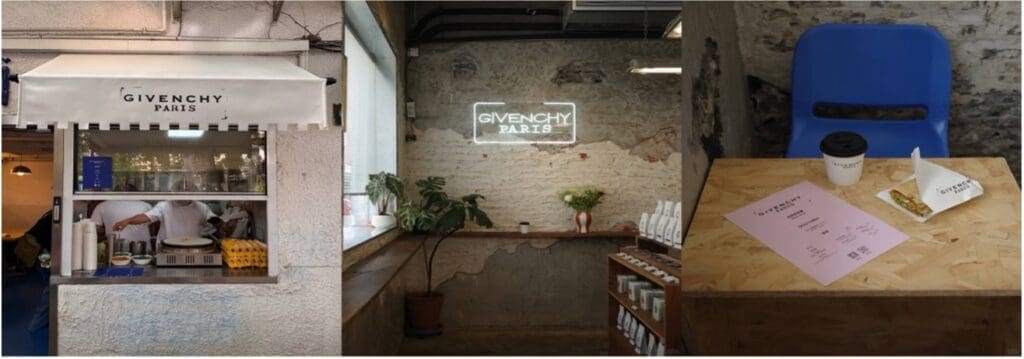
Earlier this year, Givenchy launched a three-day pop-up store in Shanghai in partnership with four local breakfast shops. The French fashion house invited visitors to engage with the brand through a curated menu of local breakfast favourites. Some of these included youtiao (fried dough sticks), sold for just RMB 3.
The campaign centred Givenchy around a familiar daily ritual rather than its luxury products. Similarly to Prada’s 2021 wet market campaign, it brought the brand closer to consumers, making it more approachable and relevant to younger audiences. The pop-up generated significant social media buzz, amplified by celebrity brand ambassador Fan Chengcheng. Ultimately, the activation captured attention and sparked conversation, raising awareness while preserving Givenchy’s exclusivity.
What international brands can learn
All of these examples illustrate how temporary retail has become a core strategy for luxury brands operating in China. While the format is not new, many luxury houses are using it in increasingly inventive ways to stand out in a highly competitive China luxury retail market. These formats have evolved beyond temporary retail spaces into cultural and commercial touchpoints that strengthen brand relevance and consumer connection.
This is particularly significant in China’s digital ecosystem, where the social commerce market is projected to exceed 4 trillion USD in 2026. Within this landscape, pop-ups have an impact beyond just the physical event. Digital platforms also amplify their reach and boost consumer participation.
For international brands, the key lesson is to move beyond treating pop-ups as short-term marketing activations. The best campaigns tell a clear story, encourage participation and make shopping feel part of the experience, while staying relevant to local consumers. They also provide valuable opportunities to test brand positioning, gauge consumer response and experiment with new retail concepts. Compared with permanent stores, pop-ups offer greater flexibility and lower long-term commitment, allowing brands to explore new ideas, locations and audiences while reducing risk.
Most importantly, the most successful pop-ups continue to deliver value long after the activation concludes, fostering deeper connections between brands and consumers.
Key takeaways
- Luxury pop-ups have become strategic brand platforms. In China, pop-ups are no longer just temporary retail spaces. They are now used to drive visibility, cultural relevance and stronger consumer connections.
- Experience has become a key driver of value. From immersive environments to culturally tailored concepts, successful pop-ups give consumers reasons to participate beyond the product itself.
- Local relevance is as important as visibility. The strongest pop-ups balance attention-grabbing concepts with meaningful connections to local consumer behaviours, interests and cultural touchpoints.
- The impact extends beyond the event itself. In China’s digital ecosystem, successful pop-ups generate ongoing visibility and engagement, creating long-term value beyond the physical activation.