









The evolution of Chinese drinking culture
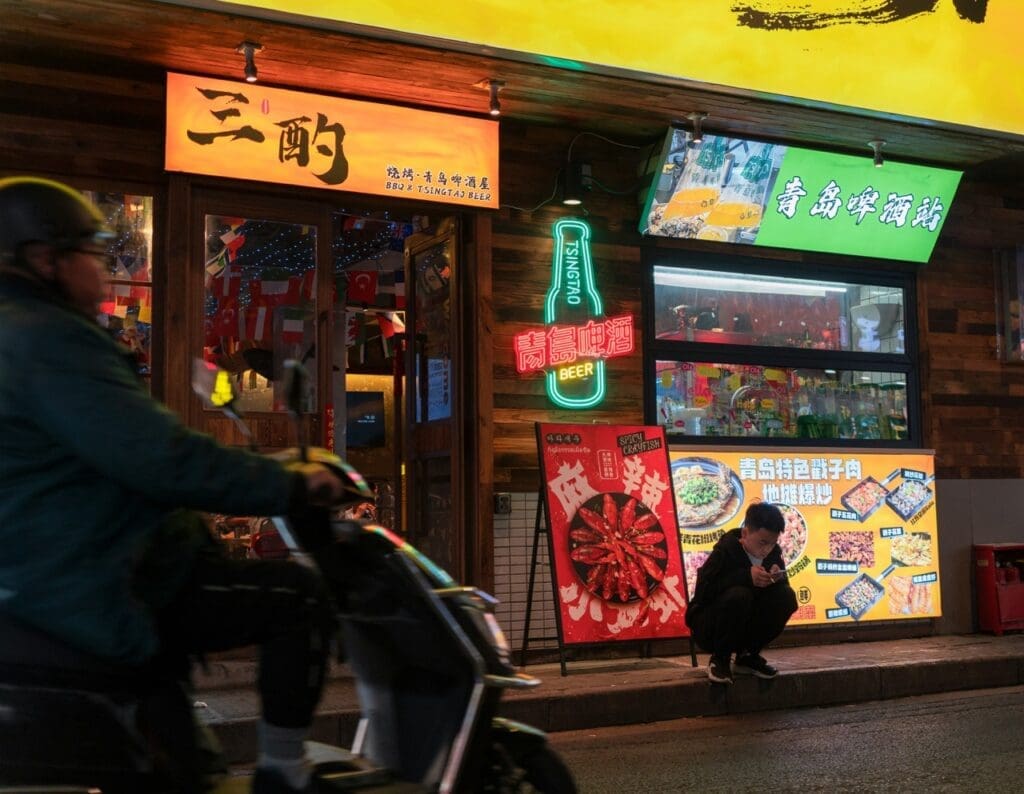
During my student life in Chongqing, I learned what drinking culture means in China. At mealtime – on the winding backstreets in the humid, baking heat of summer, groups eat fiery hotpots and drink local beers or Chinese spirits. The local lager – 山城 (Shancheng) – was a favourite of mine due its student-friendly price point of 2.5 RMB
(c.£0.30) for a 600ml bottle, although bars often imposed a surcharge if you wanted a cold one from the fridge.
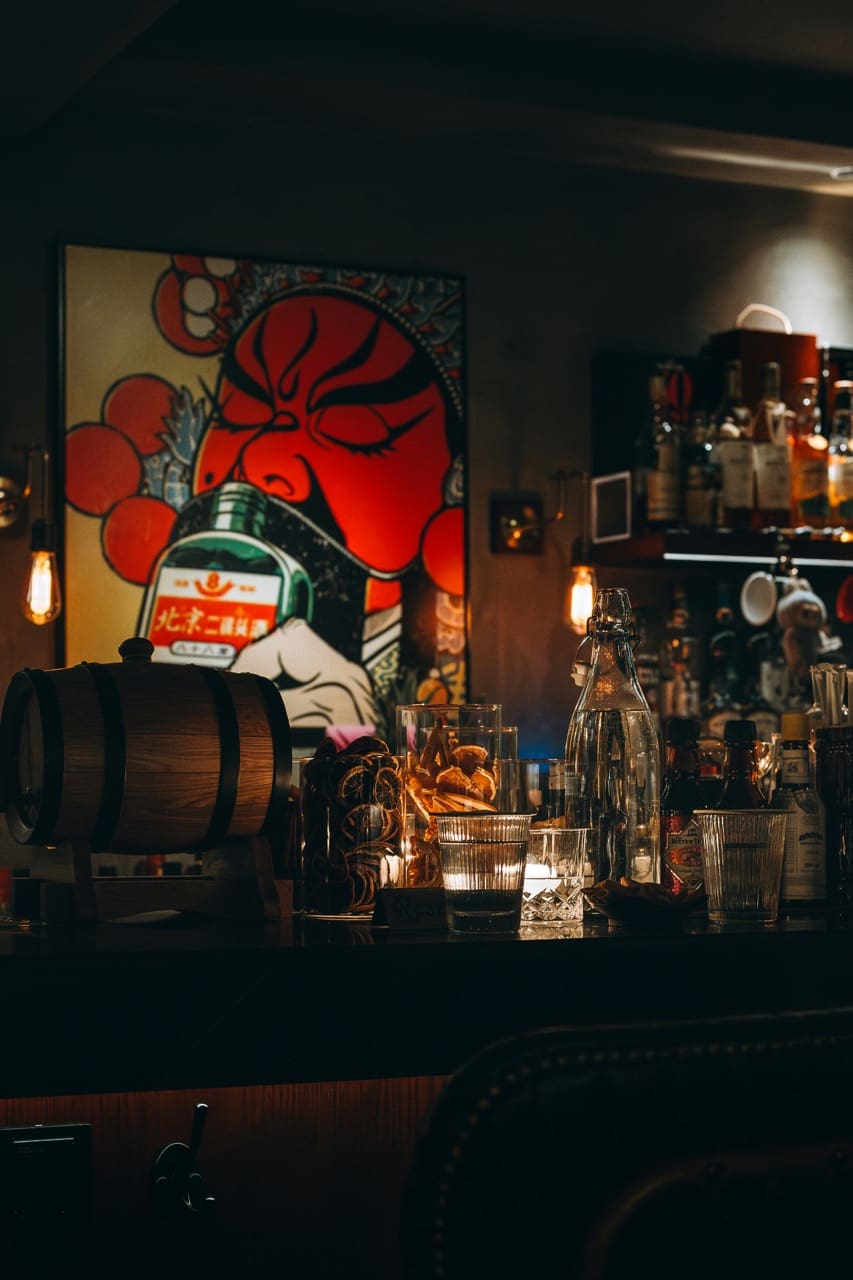
In bars, karaoke ‘KTV’ venues, and clubs, bottles of imported spirits served at a table with mixer were common, alongside bottled beers – both imported and domestic. Every table came with the tools for easy drinking games – dice and cups, cards.
In later years of my time in China at professional and business meals in Beijing, Shanghai, Shenzhen and Hanghzou I was introduced to the joys of Baijiu and other Chinese spirits. High ABV, a flavour unfamiliar to a western palate, and the obligation of toasting with multiple people are a tricky combination.
But this was in the early 2010s – and drinking culture in China has evolved considerably since. The story of Chinese alcohol culture is over 9000 years old, but has changed at an unprecedented rate since China’s opening up in the 1980s, and then ascension to the World Trade Organisation (WTO) in 2001.

Moving from obligation to enjoyment
The culture of obligation drinking – inescapable rounds of toasting at business meals and social and community celebrations – is well known to anyone who has spent time in China. However, the rise of drinking for pleasure illuminates wider behavioural and attitudinal change, in particular among younger generations.
From the early 2010s until the Covid pandemic, cocktail bars, speakeasies, British style ‘pubs’, and other bar settings proliferated, popular among an online generation looking to be seen in trendy locations, and hungry for experiences. This opened the door for imported brands beyond those which were established gifting categories – cognac, French wines, single malts – into a variety of spirits, craft beers and sparkling wines.
During the pandemic, with bars and restaurants shut, Gen Z and Millennial consumers found new ways to enjoy alcohol at home, and shared it online through social media platforms like Xiaohongshu and Douyin. Looking to learn how to replicate professional quality cocktails at home, as well as showing off your own creations online, imported alcohol became a lifestyle category; to date the hashtag 调酒’ (mixology) has 2.4bn views on Xiaohongshu, and 14.39bn on Douyin.
This at-home trend transformed into the concept 松弛感 (laid back feeling) – drinking in self-directed, more casual environments. This dovetailed with emerging interest in new hobbies such as outdoor activities – while camping or hiking for example.
Tipsy philosophy and a brewery revolution
Consumption of alcohol has changed in more than just its location. Several connected trends are driving a wave of premiumisation among the under-35s.
Health consciousness – both physical and mental – is a growing focus, so low ABV and low-calorie options are gaining traction. Meanwhile more young women are drinking than before – but driven by aesthetic, content-friendly, and cocktail-forward options. 微醺 – or ‘tipsy philosophy’ is a trend promoting a gentle level of inebriation, eschewing being drunk.
Meanwhile, the Chinese domestic brewing and distilling ecosystem continues to diversify. China is now home to more than 10,000 craft breweries – and the market is predicted to almost quadruple in the next ten years to $23bn. Chinese whisky brands are still a few years from maturation – but significant investment in the space should see these brands make an impact in the coming decade.
Added together, we see a move towards quality – both in domestic and imported segments, creating significant opportunities for expansion.
Alcohol routes to market evolve, and categories diverge
The rise of eCommerce in China has also had a deep impact on the category – enabling many of these contemporary trends, as well as giving brands a direct route to the 53% of consumers who buy alcohol online (comparable US figure is just 14%).
Between 2018 and 2024, online alcohol sales grew at an average of 16% each year – elevating China to the largest alcohol eCommerce market in the world, at 40% of total global sales. This shift to direct to consumer sales and digital discovery make it more important than ever for brands to be engaging with their target audiences on social media – through organic content, influencer and celebrity placements, and paid advertising.
Not all categories have benefited equally from this growth, however. Both wine and cognac have suffered from considerable degrowth in the market, in part due to ongoing anti-corruption drives, but also faced with demographic shifts and changing consumer preferences. This is in marked contrast to the Chinese whisky market which is now the leading imported spirit by volume; and encouraging sales growth across gin, vodka, and tequila.
Reaching the new Chinese alcohol consumer
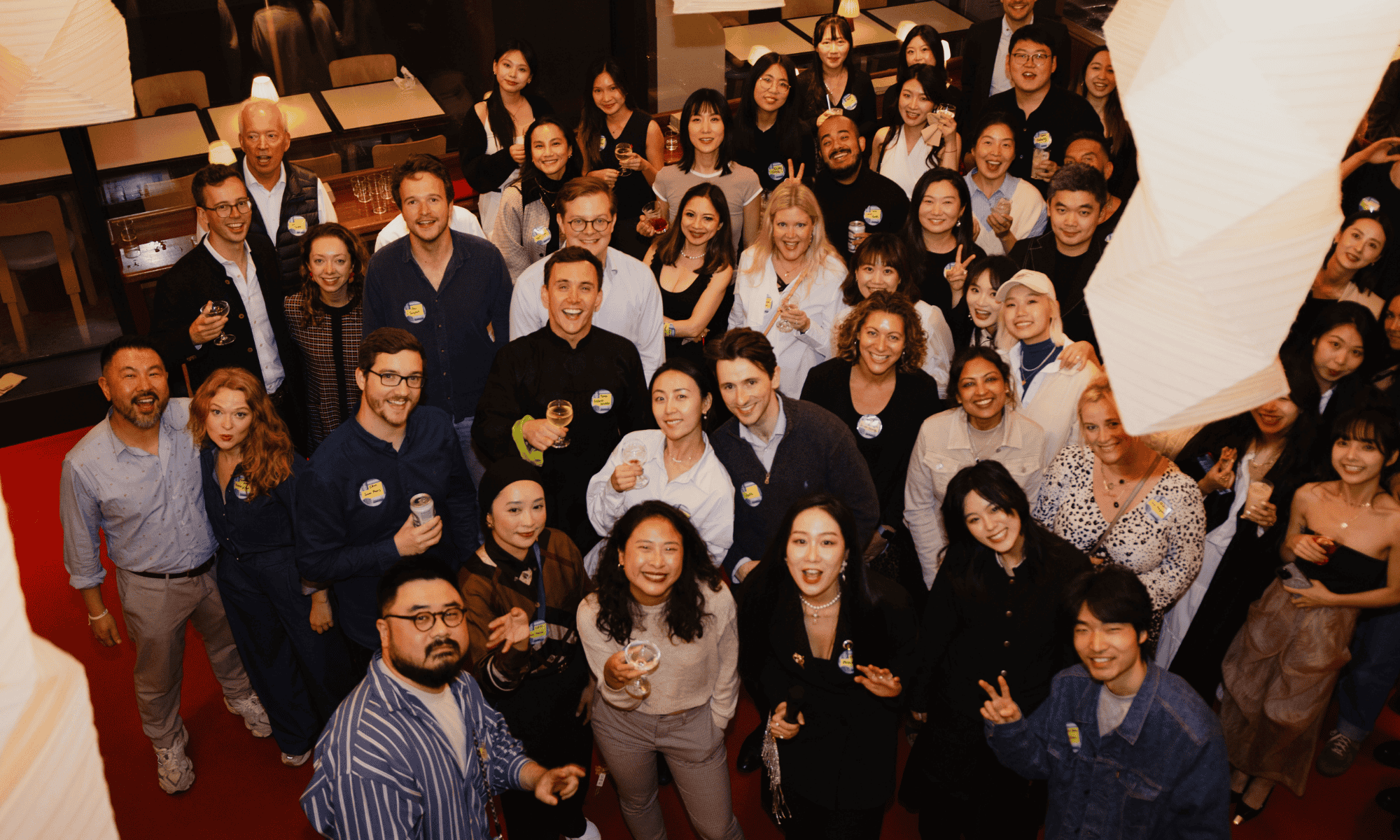
Any go-to-market strategy for China needs to have a clear view of its customer. At TONG, as a specialist bicultural China marketing agency helping brands connect with Chinese consumers worldwide we start by asking three key questions:
- WHO is my Chinese consumer?
- WHERE does my consumer discover, research, and buy?
- HOW do I ensure my brand shows up to my consumer, on the channels they use, in a way that is credible, localised, and stands out?
Whether through Xiaohongshu marketing, Chinese KOL campaigns, events in on-trade locations, or marketing to the Chinese diaspora – the answer for every brand is slightly different.
When I was drinking 山城 lager in Chongqing for 2.5 RMB a bottle in 2009, the idea that China would become the world’s largest alcohol eCommerce market would have seemed far-fetched. It is a market that is constantly changing, and surprising – but rewards those who pay attention.