


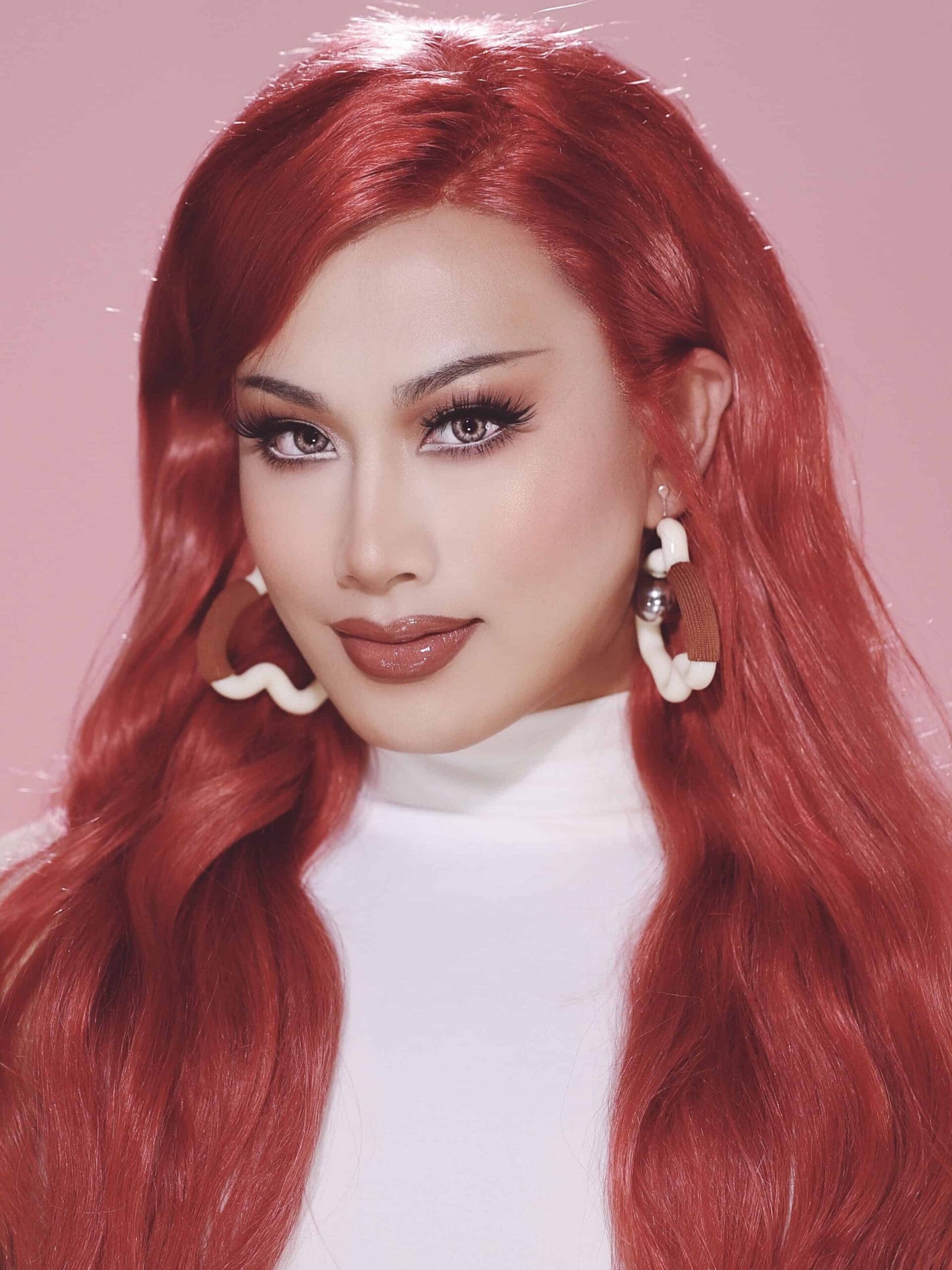

On a dazzling stage before a live studio audience of cheering fans, lit up by countless mega-watt blue spotlights, Graham Norton takes the microphone to announce: “Up next to perform, from Guangzhou, China… IT’S WOOWU!” The spotlights descend on a glamorous drag queen as she struts onto the stage in flawlessly painted makeup of dramatic red eye shadow and knife-sharp contouring, an elaborate wig styled in a Tang dynasty-inspired hairstyle adorned with glowing crystal flowers, and a billowing silky dress that looks straight out of a Chinese mythical fairytale painting yet is embellished with futuristic chromatic elements and a translucent PVC astronaut-suit collar.
It’s serving moon goddess Chang’e fantasywear meets Space X flight attendant uniform, and it’s giving us life. The intro beats of her chosen song start to play tantalisingly and Woowu launches into the first verse of ‘Material Girl’ by Madonna. She sashays across the stage on red platform heels, crooning richly into the microphone, at once both thrillingly beautiful and comedically camp. As the second verse begins, she suddenly switches smoothly into full-on Cantonese lyrics – this isn’t just ‘Material Girl’, but 1980’s Canto-pop icon Sally Yeh’s cover version. The camera pans momentarily across the judges panel where British singer Leona Lewis is dancing in her chair and legendary drag queen Trixie Mattel’s jaw has quite literally dropped.
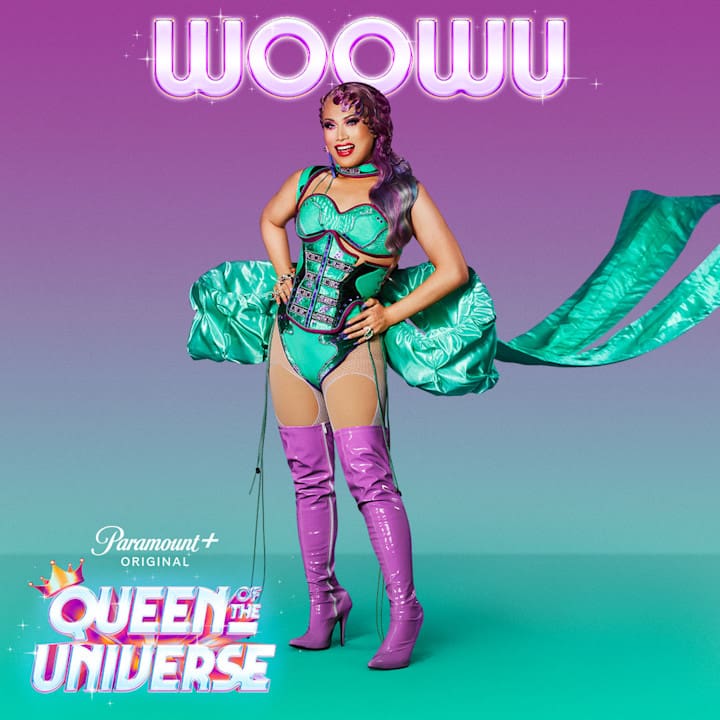
On a dazzling stage before a live studio audience of cheering fans, lit up by countless mega-watt blue spotlights, Graham Norton takes the microphone to announce: “Up next to perform, from Guangzhou, China… IT’S WOOWU!”
The spotlights descend on a glamorous drag queen as she struts onto the stage in flawlessly painted makeup of dramatic red eye shadow and knife-sharp contouring, an elaborate wig styled in a Tang dynasty-inspired hairstyle adorned with glowing crystal flowers, and a billowing silky dress that looks straight out of a Chinese mythical fairytale painting yet is embellished with futuristic chromatic elements and a translucent PVC astronaut-suit collar.
It’s serving moon goddess Chang’e fantasywear meets Space X flight attendant uniform, and it’s giving us life. The intro beats of her chosen song start to play tantalisingly and Woowu launches into the first verse of ‘Material Girl’ by Madonna. She sashays across the stage on red platform heels, crooning richly into the microphone, at once both thrillingly beautiful and comedically camp.
As the second verse begins, she suddenly switches smoothly into full-on Cantonese lyrics – this isn’t just ‘Material Girl’, but 1980’s Canto-pop icon Sally Yeh’s cover version. The camera pans momentarily across the judges panel where British singer Leona Lewis is dancing in her chair and legendary drag queen Trixie Mattel’s jaw has quite literally dropped.
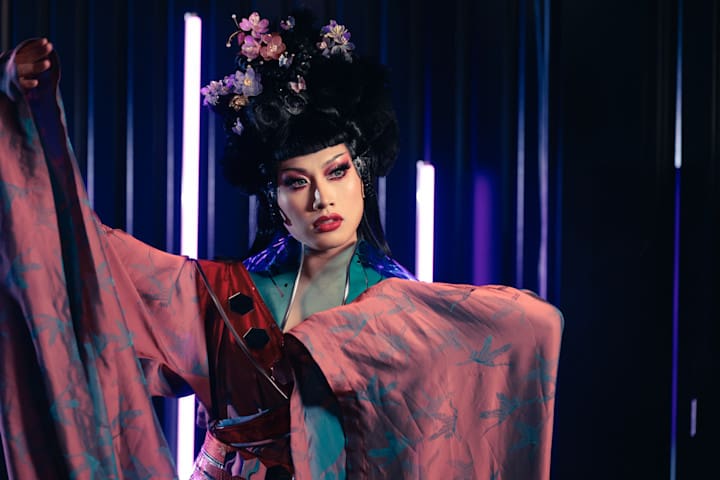
The debut episode of Queen of the Universe, a drag singing competition program produced by Rupaul’s Drag Race production company World of Wonder and streamed on Paramount+, introduced the world to Woowu; the first Chinese drag queen to appear on an international TV show. When not in drag, Woowu goes by the name Eli and comes across as a more demure (though still highly stylish and charismatic) young man.
In the practice of many drag queens, he refers to his alter-ego Woowu and drag sisters with she/her pronouns in English (though it’s worth noting that in spoken Chinese, pronouns are inherently non-gender-differentiated). In his background segment on the show, Eli sports a chic black beret, heavy chain necklace and leather jacket to introduce himself – in contrast to his ultra-femme appearance in drag, here is an image of subversive masculinity.
Video diary footage shows Eli working out, getting ready for shows and bringing the camera along to his favourite hotpot restaurant. “When people think of China, they don’t think about drag,” he tells viewers, but yet this is a subculture that is thriving and growing in the most expressive ways across Chinese cities and social platforms. “I love doing drag because I can lead a Hannah Montana double life. In the daytime, I’m a boy. At nighttime, I’m a girl. Woowu can get a bit naughty, even if Eli cannot do that.”
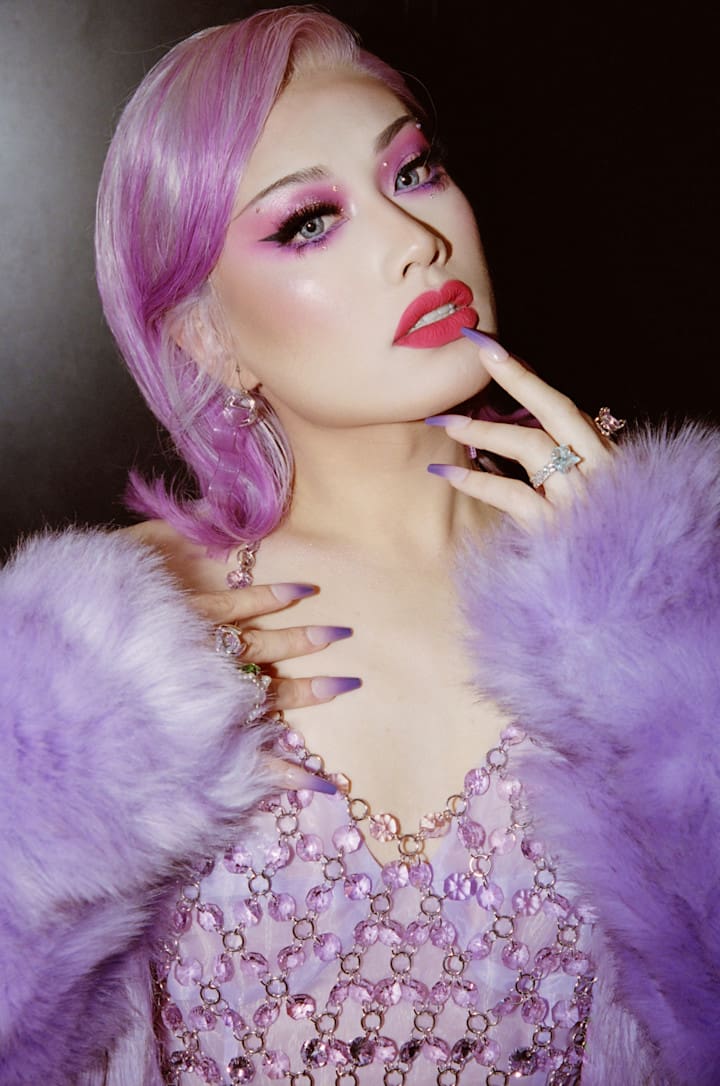
Eli’s first steps into the world of drag began eight years ago. In his early 20s, he found himself working at an uninspiring office job in his hometown of Guangzhou. Searching for an expressive outlet for pent up creativity and LGBTQ identity, he came across a drag contest at a nightclub in Shanghai and spontaneously signed up for it.
For one month, Eli studied videos of drag performances online and practised doing makeup, then went straight to Shanghai for the event. “I had drawn my eyebrows on so high,” he reminisces about that first show, “that I scared the life out of a waiter when I stepped out of the elevator!”
He didn’t win anything at that first performance, but did find something even more rewarding: a tight-knit community of kindred creative individuals, a safe space to have fun, and an opportunity to express yourself unapologetically through the most exaggerated explorations of style and performance. Just a few months after that first trip, he packed up and moved to Shanghai permanently.
Over time, glamorous Woowu with the sassy jokes and soulful voice became an accomplished performer of the city’s underground drag scene. “Back then, it was a very small community. Beijing and Shanghai were the only places where you could go to drag events.” Now, emerging drag communities can be found in most large cities, from Shenzhen to Chengdu.
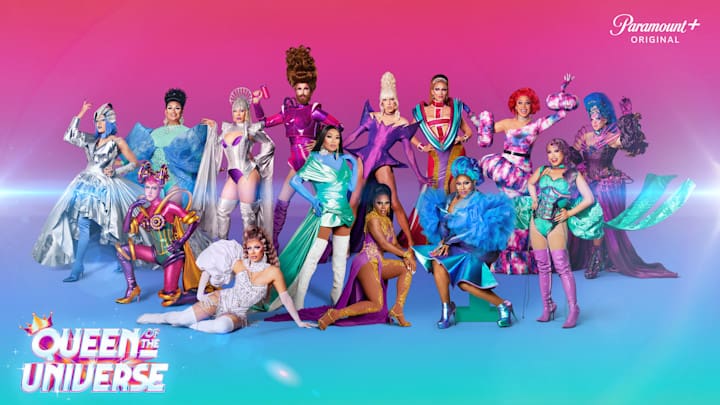
In the years since, drag has become an international sensation. What began as – and still is – a fringe LGBTQ art form and fixture of queer underground nightlife, is now also a mainstream pop culture phenomenon, propelled in great part by the impressive media empire of Rupaul Charles and an ever-growing collection of shows in his Drag Race franchise. What’s particularly striking about the cultural saturation of drag is its globalised nature.
RuPaul’s Drag Race has launched international spin-offs in 9 countries and counting, and has developed other programs that feature queens from many different countries showcasing their craft, talent, and the style of local drag communities they come from. As a queer art form that fosters empowerment, safety and communal care for creatives and performers outside of the heteronormative sphere, drag has been a vehicle of both globalised cultural solidarity, as well as practices of hyperlocal community-building.
“When I first started, I was learning everything about drag makeup from watching Miss Fame’s videos in New York… the products, the techniques, everything,” gushes Woowu, referencing American drag queen and Youtuber Miss Fame’s ‘Painted By Fame’ series. To practise and track progress, Woowu in turn started recording and sharing her own attempts at these looks on popular Chinese video app BiliBili, inadvertently attracting an audience of local Chinese followers who were also keen to learn – a truly border-transcending circularity of drag culture.
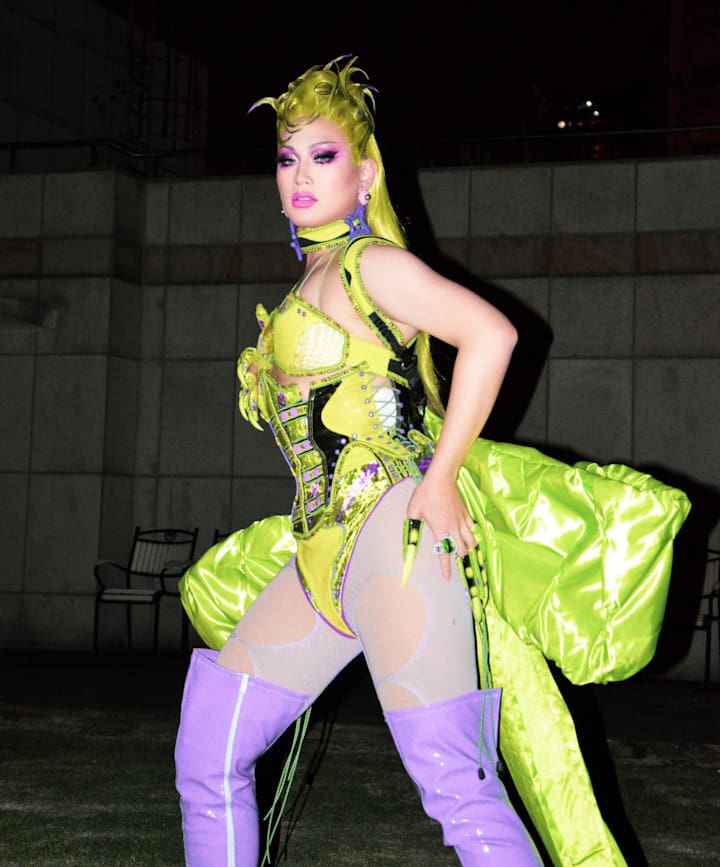
Download our quarterly paper, Issue #2 STYLE to learn what China’s emerging drag communities means for global fashion and beauty brands.