





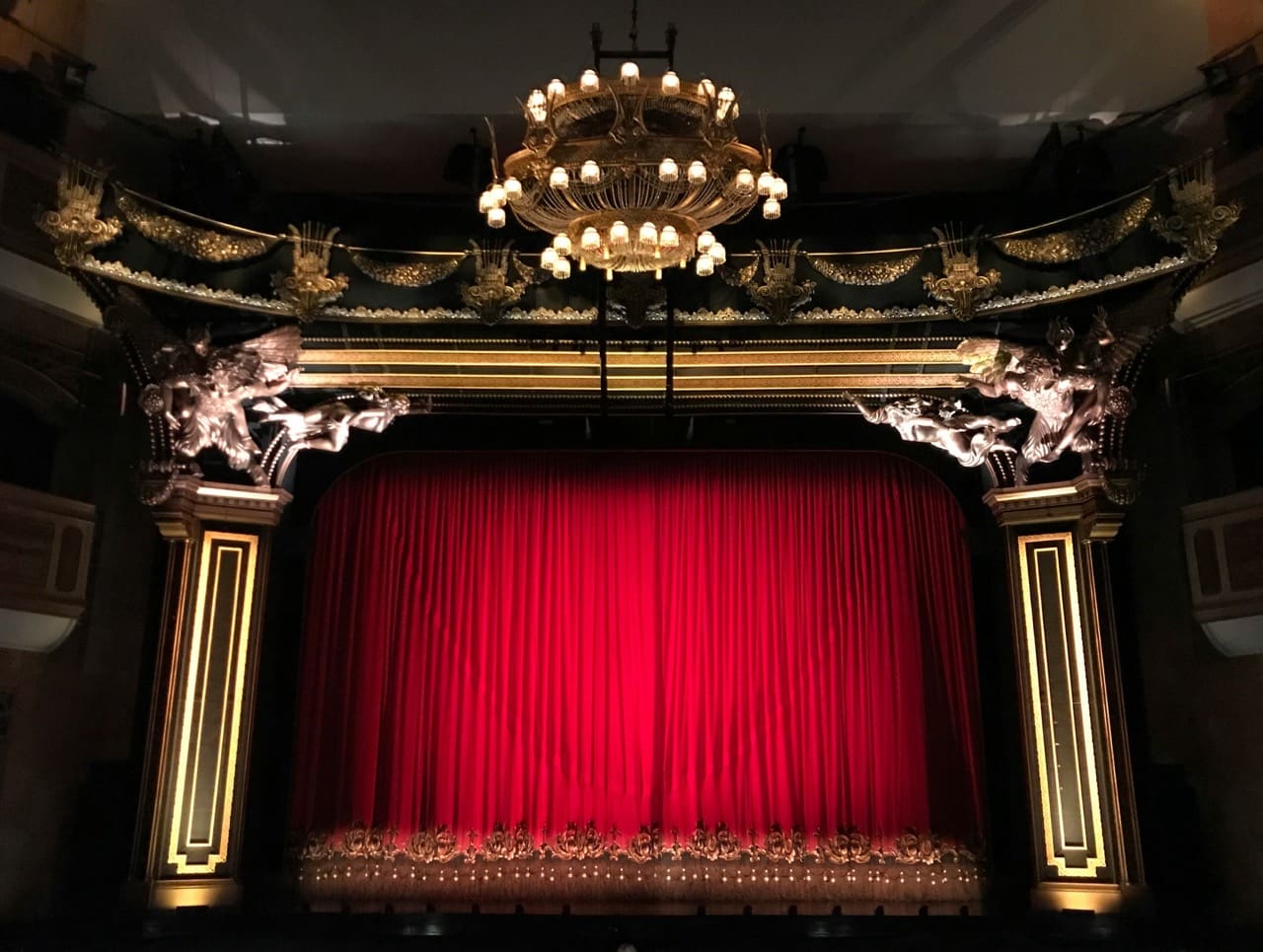

For years, musical theatre in China sat at the cultural margins. Popular with a dedicated but relatively small audience, it was seen as a specialist interest rather than a mass one. But with almost 20,000 musical theatre performances nationwide in 2025 (up 15% vs 2024), and 8.18m theatre-goers contributing to box office revenue reaching 1.8bn RMB, the joy of musical theatre is reaching more Chinese fans than ever before.
Across major cities musical theatre is moving into the mainstream, driven by younger audiences, stronger cultural infrastructure and a growing appetite for immersive, shareable offline experiences. As we’ll explore in this piece, emerging from this growth is a unique fan culture, as well as a bigger market with opportunities for Western and Chinese productions and brands.
A youth-driven cultural habit
Industry reporting published by People’s Daily shows that musical theatre has become one of the fastest-growing segments within China’s live performance economy, with nationwide audiences now reaching into the millions. Much of this growth is being fuelled by younger consumers.
The majority of musical theatre audiences today fall within the 18–35 age bracket, with particularly strong momentum among Gen Z. This is a group with growing spending power, high social-media activity and a clear preference for experiences that feel emotionally complete and socially meaningful. For them, attending a show is not simply about watching a performance. It is about atmosphere, participation and identity.
Shanghai and the rise of theatre-going communities
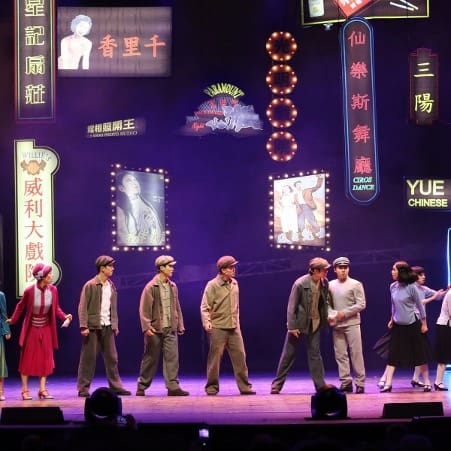
Nowhere is this more visible than in Shanghai. As China’s most developed theatre market, the city has become a destination for touring and licensed international productions, supported by dense commercial districts and a thriving night-time economy.
Rather than existing in isolation, theatres in Shanghai are embedded within wider urban ecosystems. Restaurants, bars, retail and cultural venues all benefit from performance-driven footfall, helping to form stable theatre-going communities rather than one-off audiences.
This urban concentration has also given rise to a new form of cultural tourism. Increasingly, young fans are travelling across cities specifically to see shows, following a “watch a show + travel” consumption path that mirrors behaviour more commonly associated with concerts or sporting events.
The SIX effect: when a show becomes a citywide experience
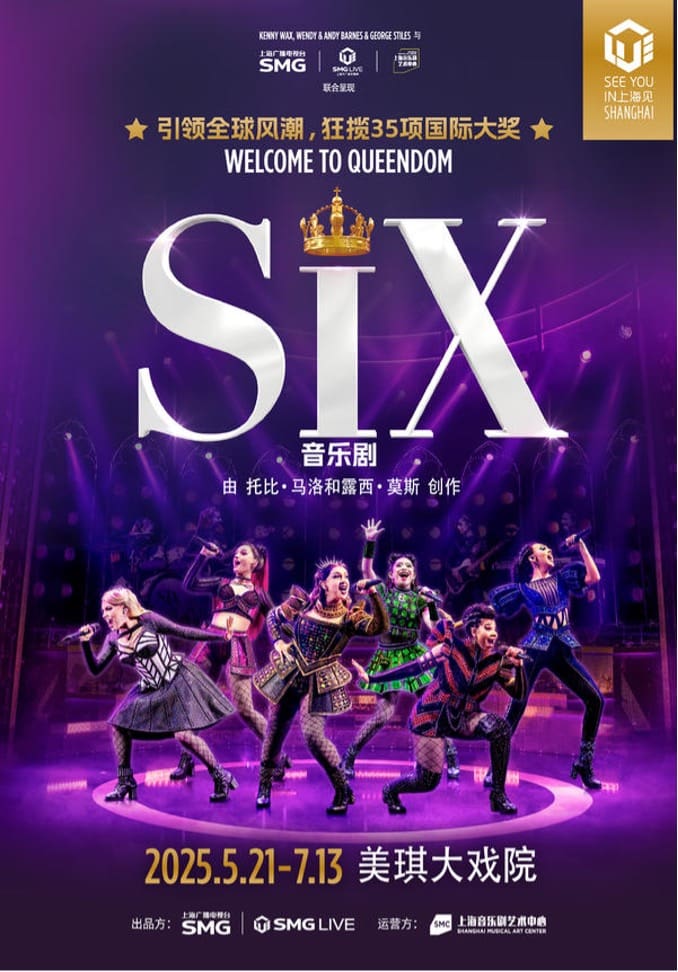
The Shanghai run of SIX offers a particularly vivid illustration of how musical theatre is evolving in China.
Around 30% of audiences travelled from other cities specifically to see the show, underlining the strength of musical theatre fandom and its ability to motivate intentional travel. Just as striking, around 50% of the audience was under 25, highlighting the genre’s deep connection with younger cultural consumers.
Positioned as a “one-city-only” engagement, SIX became the anchor for a full evening, and often a full trip, of consumption. Pre-show dining, post-show nightlife, merchandise purchases and city exploration all formed part of the experience. Its bold visual identity and concert-style format also drove high volumes of user-generated content, with audiences actively documenting and sharing their participation online.
When theatre spills into the city
Increasingly, musical theatre in China is no longer confined to the stage. Successful productions are extending into the city itself, creating crossover experiences that blend culture, hospitality and lifestyle.
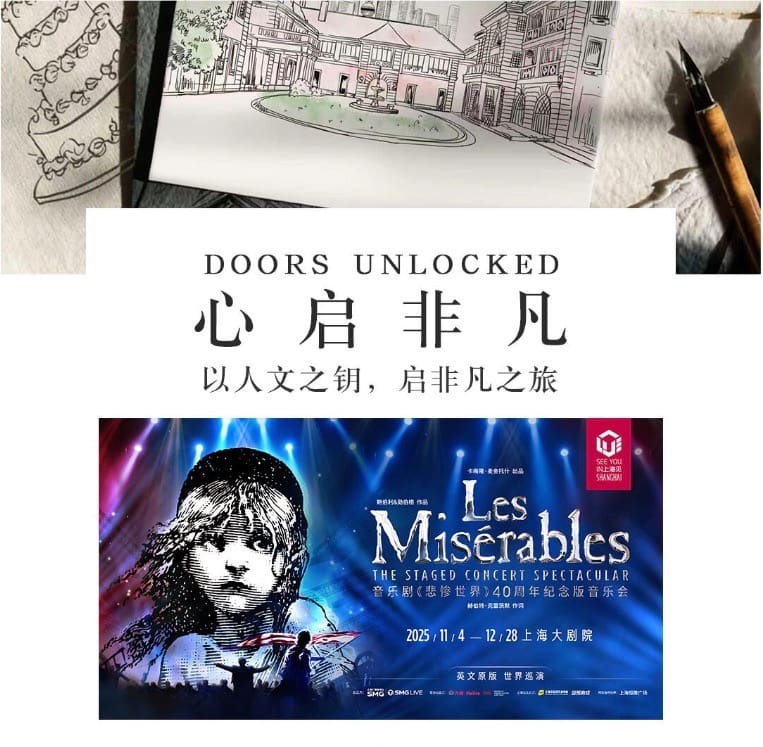
Hotel brands have been among the most active partners. Collaborations between IHG and Les Misérables, for example, have included themed guest rooms, bundled hotel-and-theatre packages, and in-hotel activities that echo the world of the show. These activations turn a night at the theatre into a multi-day cultural experience.
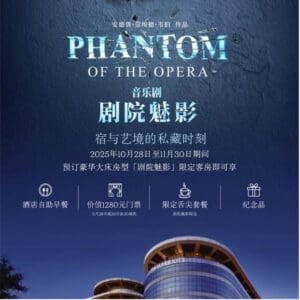
Similarly, Marriott partnered with The Phantom of the Opera on a time-limited campaign featuring themed afternoon teas, IP-led gift sets and immersive photo moments. Rather than feeling promotional, these experiences allowed fans to step further into the story universe, blurring the line between cultural consumption and lifestyle participation.
Musical theatre as content IP in the experience economy
As young Chinese increasingly move from ‘owning’ to ‘experiencing’ as their preferred form of consumption, musical theatre can play a particularly powerful role as a cultural IP within an experience-driven economy.
For these young consumers, value comes from the combination of scene, emotion and ritual. Musical theatre delivers all three. It offers immersion, atmosphere and a sense of emotional completeness that extends well beyond the duration of the show.
This also makes musical theatre highly extendable. Thematic cafés, pop-ups, merchandise and hospitality collaborations feel like natural extensions of the core IP, rather than unwanted overly salesy add-ons. Done well, the world building flows seamlessly across physical spaces and industries, creating experiences that are designed to be shared.
Sharing the experience
For Chinese Gen Z audiences, musical theatre is as much a social experience as a live one. Platforms such as Xiaohongshu (RED) play a central role in how shows are discovered, interpreted and shared. Attending a performance often triggers a wave of posts documenting outfits, theatre interiors, themed food, merchandise and post-show reflections, framed as personal recommendations rather than promotions. These posts circulate within interest-led communities, where peer validation and visual storytelling carry more weight than official advertising.
Musical productions increasingly lean into this behaviour, using fan-engagement through their own official accounts, early previews, influencer attendance, dedicated photo moments and social-friendly design to encourage organic sharing across RED, Douyin and Weibo. The result is a promotion model built around participation and conversation, where cultural experiences gain momentum through community visibility rather than broadcast reach alone.
What brands can learn
The rise of musical theatre in China tells us a lot about how young Chinese are looking to engage with both cultural experiences and with brands.
The theatre ecosystem underscores how immersive experiences – think even of branded installations such as Louis Vuitton’s ‘The Louis’ – are growing in popularity, scale and ambition, with a brand experience able to extend far beyond a product purchase, a two hour show, or a night in a hotel.
Another core learning is the rise of niche fandom communities which are spilling out into new interest areas beyond the long-established armies of K-Pop fans. This kind of demographic targeting means cross-category collaboration is ever more important – as sports teams, musical theatre productions, and more boast loyal fans hungry for more content and experiences.
To engage this audience, brands need to shift from being content narrators to experience creators. An experience is by its nature co-created between the host and the audience – creating a stronger, emotionally deeper link. This creates opportunities far beyond brands’ traditional fields of play – enriching the lives of the audience, and making memories to last.