











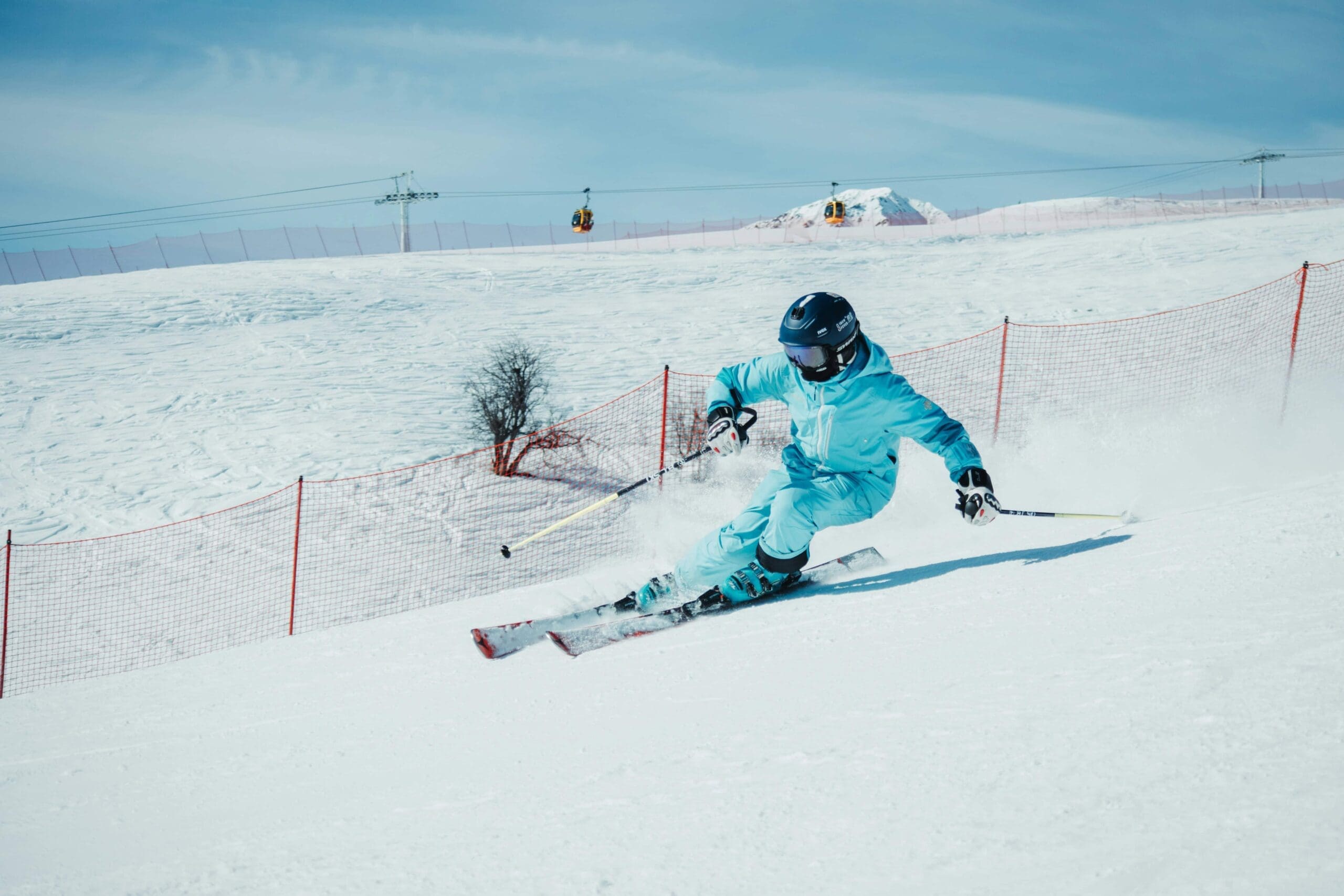

As Beijing 2022 gets in full swing, Chinese snow sports are on the up. Government initiatives to get “300 million people on ice and snow” have been compounded by covid travel restrictions, driving a boom in domestic tourism. Meanwhile, Chinese fashion groups are acquiring major outdoor labels and luxury brands are catering to local tastes in the space.
In 2019, Chinese sports group Anta bought a majority share in Amer, which owns Salomon, Atomic, and Acr’Teryx among others. But away from policy drives and big business, a fresh generation of skiers are cultivating looks that stand out on the slopes.
Snow sports make up a global community, connecting networks in Europe, Canada, and Japan. Chinese skiers are racing into the space, ready to leave their mark. Searches for ski instruction on the lifestyle platform RED increased by 100% in 2021, while Eileen Gu, China’s most exciting gold medallist at Beijing 2022, featured as guest editor for VOGUEplus in China on the eve of the games.
It’s clear that a rush of interest at the grassroots level is intertwined with pro athletes doubling up as key tastemakers for a new generation of enthusiasts. Chinese socials are shaking up snow fashion with an array of content flaunting street-to-snow guochao collaborations. Skiers are also adding youthful, often cutesy touches that challenge Western ski tastes, which tend to embrace more functional, streamlined designs.

Domestic streetwear brand Peacebird recently collaborated with Fabio Del Bianco, formerly of Moncler, to create an exciting range for this ski season. Adapting the Gen-Z love for baggy outerwear, the Snow Bird line is a hit on Chinese socials, bolstered by the youthful Wang Yibo as its ambassador.
This street-to-slope crossover between a homegrown brand and an iconic luxury designer allows Chinese skiers to feel part of a global community, while championing local designs. An arguably more innovative collaboration is Ping & Up’s Breaking Bad bib pants. Reminiscent of the hazmat suits worn by Walter and Jesse, Ping & Up’s latest snow wear really speaks to living life on the edge, as ever more affluent Chinese embrace extreme sports.

Skiers and boarders are also adding accessories to their outfits that challenge Western notions of how to dress for the pistes. Adult tastemakers, including men, are wearing plushie turtle knee pads, gloves and helmets with cute eyes, or fluffy ears over their helmets. An homage to kawaii culture on the slopes also speaks to a shared regional ski culture, somewhat reflecting Japanese tastes. This again highlights a playful departure from the more functional designs preferred by many Western skiers.
TONG spoke to an industry insider working at a major outdoor brand who also stressed this street-to-slope trend and the vitality of Chinese ski fashion. “China’s skiing craze resembles snowboarding and youth fashion more than in the West… [skiers] prefer relaxed styles with loud colours. To some extent it highlights how current Chinese youth love to assert their individuality.”

They also pointed us to local communities developing on online spaces, which they believe are still largely concentrated in first-tier cities. WeChat official accounts provide up-to-date information for affluent, urban enthusiasts to arrange outings to some of China’s major resorts, such as Lake Songhua or Changbai Mountain, both in Jilin, near the North Korean border. This provides a sense of belonging among adrenaline junkies who wish to get away from southern and coastal cities for some action in the snow, at which point the street-to-slope trend makes complete sense.
The WeChat official account SNOWHERO represents four stores in and around Shanghai, while serving as a platform for enthusiasts to connect and organise trips. In January, SNOWHERO ran an engagement campaign with Salomon, one of the brands acquired by Anta in 2019. Users were encouraged to share their SNOWHERO and Salomon gear together on RED, using the hashtag #ShowOffYourSnowboard along with the lifestyle app’s wider hashtag for the Winter Olympics, #REDSnowSeason. “While skiing has an appeal in itself, many people are also seeking a means of expressing their identity and social approval” – visibility on social media is an appealing way to do both.

It’s clear that Chinese skiers and boarders, and the domestic brands speaking to them, are integrating into a global culture with a youthful vitality, representative of an affluent urban youth who embrace nature occasionally too. Online communities and social media trends are spaces for these tastes to mature and crystallise, while also serving as avenues for individual expression.
Winter brands seeking to connect with these dynamic consumers need to take note of how Chinese snow fashion playfully breaks away from certain Western tastes, such as street-to-slope looks and kawaii accessories. They also ought to embrace Chinese designers that seek to appreciate and adapt pre-existing Western design expertise.