





As with Western countries, women in China still face discrimination in the workplace, politics and at home. With feminist movements facing unprecedented crackdowns since 2017, social media platforms like Weibo are increasingly important spaces for women to voice their opinion and continue the discussion on feminist issues, through literature, novels and podcasts.
China’s younger generation of feminist activists are a celebration of single and often child-free women. As China’s birth rate plummets and its population ages, the latest government policy urges women to return to the home and have two children rather than one. In 2023, women in China are rejecting patriarchal norms and expectations of marriage to pursue their own self-fulfilment.
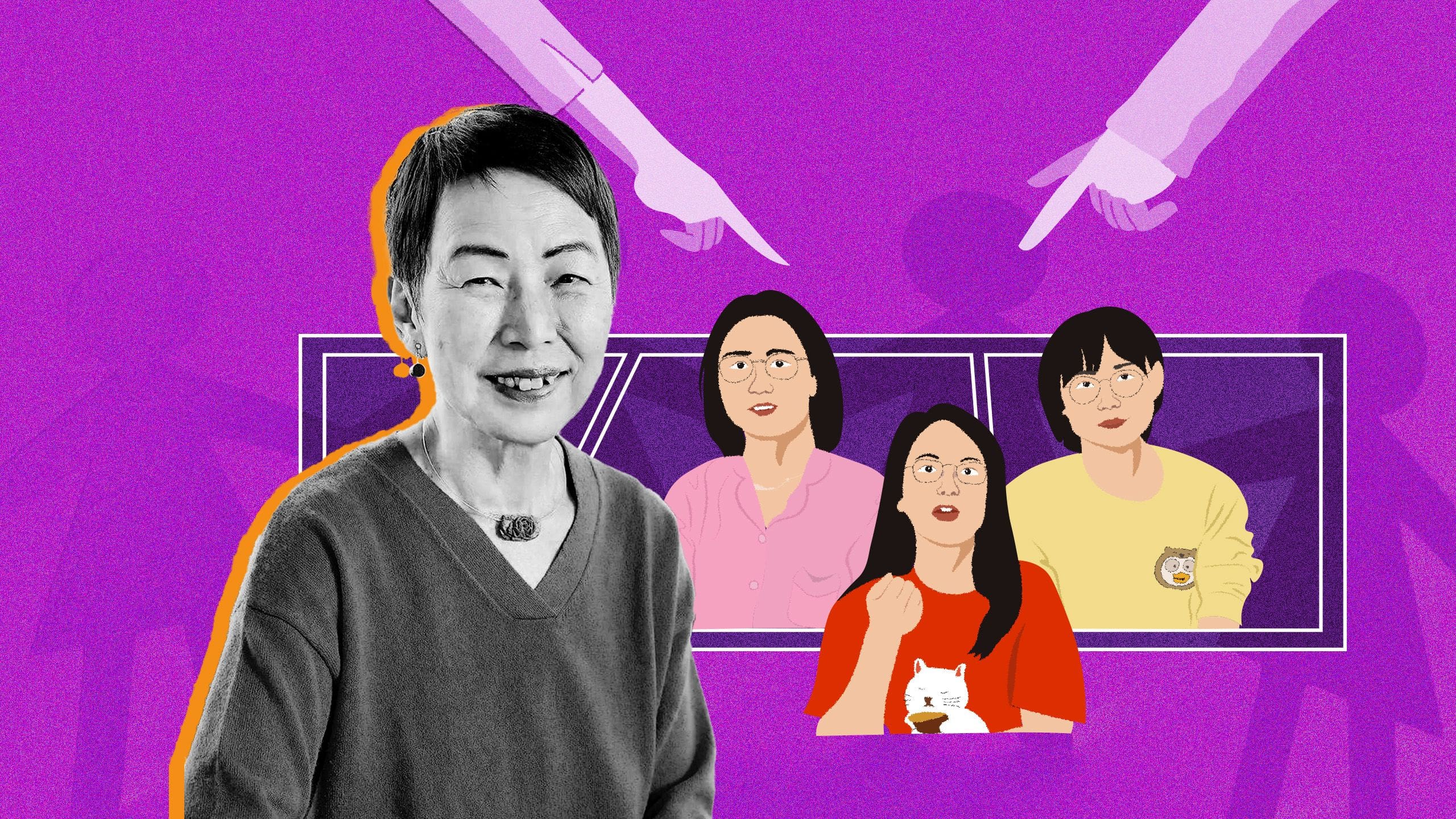
Last month, a video went viral sparking controversial debate and criticism on the nature of feminism in China. An interview exchange between Japanese Feminist icon and author, Chizuko Ueno and a Chinese social media influencer Quan Xixi, reached over 10 million views on Weibo and received 35,000 comments on Bilibili.
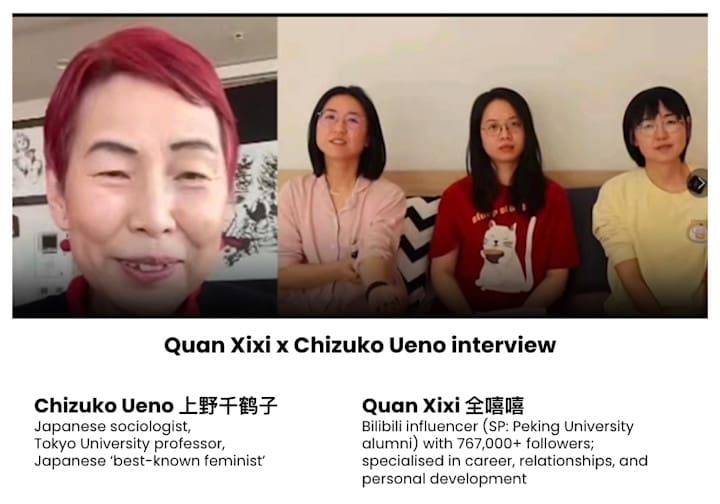
Ueno, having published eleven translated books in China, has a cult following of enthusiastic young Chinese feminists. Expectations were high when the interview aired. When Quan Xixi’s questions focused on Ueno’s relationship and personal life, posing questions like: “Are you not married because you have been hurt by men? Or is it because of the influence of your family?” netizens were quick to express their outrage.
Gen Z feminists, having been subject to harsh restriction of gender discussion online, felt as though the interview was not only a wasted opportunity to explore the subject of feminism in China from such a knowledgeable and prominent figure, it also reflected badly on young Chinese feminists and the issues they actually want to discuss.
Milly Zhang, Activation Manager at TONG, unravels the conversation which sparked intense debate amongst China’s Gen Z feminists. The following thought piece investigates the events leading up to the backlash, looking at the key feminist moments in China’s modern history and how these influenced China’s current feminist sentiment and inform the future voice of China’s young feminists.
The Rise of Neoliberal Feminism
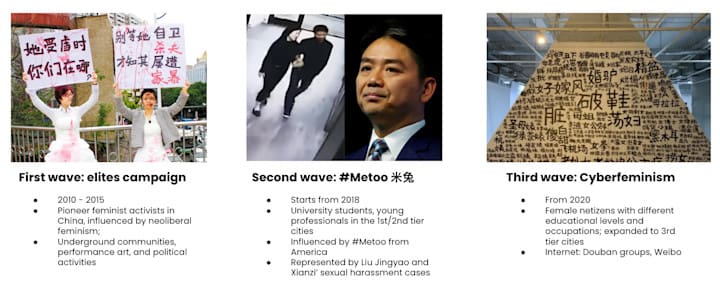
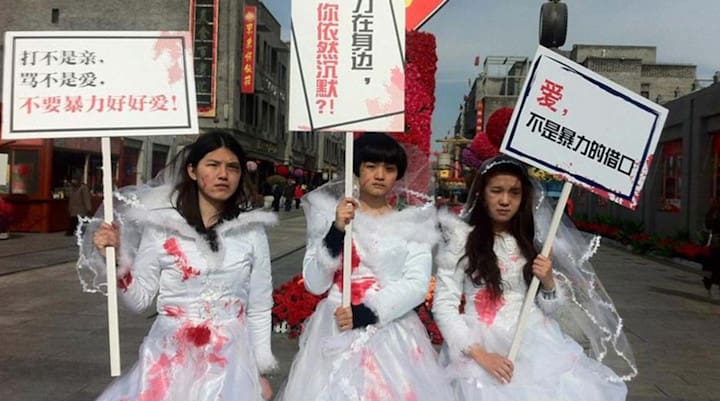
On international Women’s Day in 2015, five women were arrested for handing out stickers about sexual harassment on public transportation in Beijing. They were held for over a month in the detention centre, accused of being spies, forced into hard labour and threatened with a five year jail sentence before eventually being released on bail. News of the arrest of the Feminist Five spread around the world through the hashtag #FreeTheFive, which went viral on Western social media channels.
This event marked a new period of feminism in China, characterised by a generation of Chinese women who were outspoken, innovative, and fearless.
#MeToo
In 2018, the global #MeToo movement gained momentum in China, defying online censors with sheer volume and the use of homophones (the rice and bunny emoji, also pronounced ‘mi-tu’). The movement inspired both university students and young professionals in China’s tier 1 and 2 cities.
This second wave culminated with two cases of women accusing men in powerful positions of sexual assault and rape. Screenwriter Zhou Xiaoxuan’s sexual harassment case against TV personality Zhu Jun was eventually dropped by the courts. College student Liu Jingyao accused Richard Liu, founder of JD.com, of rape, and was subject to extensive online slut-shaming.
More than fifty Chinese women came forward with their stories of being sexually harassed or assaulted. After these two infamous cases, keywords around gender issues and sexual misconduct were heavily censored on China’s social media platforms.
Thriving in Censorship
Although there are still accounts being banned and messages being deleted, a new trend is emerging where it’s increasingly normal to discuss gender and feminism online in China.
There are many different voices under the umbrella term ‘feminism.’ Some people reminisce about the Mao era when women ‘held up half of the sky’ and joined the labour force alongside men, while some people want to promote equality in the context of democratic policy change. As a vast country with diverse cultures, communities and opinions, it’s difficult to group everyone under the ‘feminist’ label.
While it’s on trend to discuss the role of feminism in China today, female influencers and celebrities are facing increasing pressure to be the ‘perfect feminist’. Chinese social media influencer, Papi, fell victim to China’s netizens when her fans decided her content was not ‘feminist’ enough, on the basis that she gave her children their father’s last name.
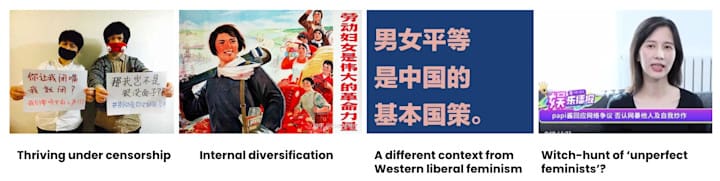
Limiting opportunities for women to explore gender issues and feminism only increases their enthusiasm for the subject, hence the strong reaction to a perceived ‘wasted opportunity’ to engage and learn from a feminist icon such as Ueno.
Many netizens expressed that the video was an example of Chinese feminism taking a step backwards. Do the questions raised by Quan Xixi make her a bad feminist?