













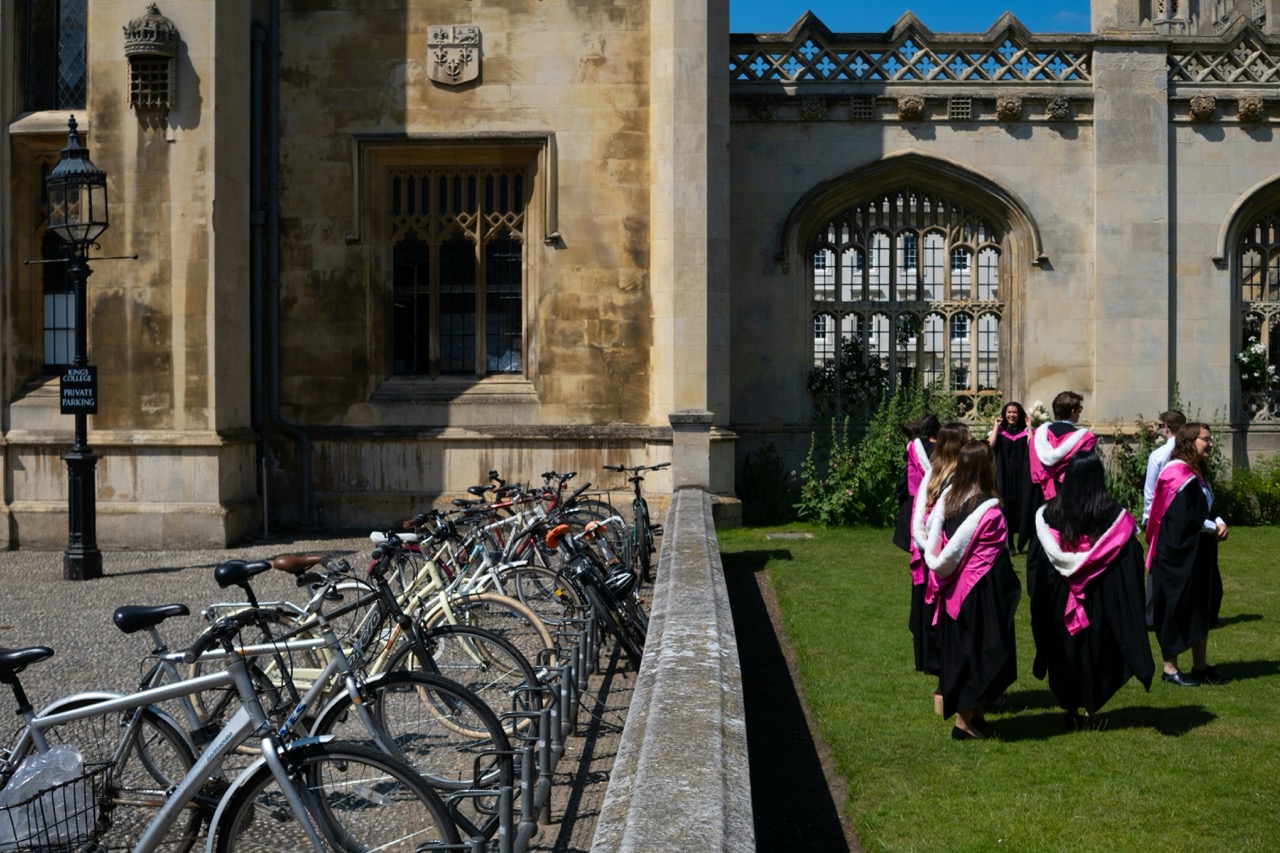

Studying in the US or UK has long been seen as among the ultimate aspirations for Chinese students. For many years institutions in English-speaking countries dominated the global rankings lists, and a buoyant jobs market in China hoovered up the hundreds of thousands of internationally educated Chinese graduates they delivered.
In 2026, the picture is more mixed – with increased global competition, more pressure on middle class families’ finances, and a fast-changing global geopolitical picture all contributing to changing behaviours and preferences among both students and their parents.
The “Big Four”: the uneasy leaders
The ‘Big Four’ destinations of the US, Canada, Australia and the UK remain popular but face unprecedented challenges on a number of fronts – many self-inflicted. From the US administration’s bellicose rhetoric around and threats to Chinese students, to international student number caps in both Canada and Australia, and growing anti-immigrant sentiment in the UK, combined with regular tightening of visa policy, there are many more considerations for young Chinese dreaming of studying overseas.
Worryingly for all four, even when policies are either reversed or eventually loosened under pressure from higher education providers, as was the case in the US with the granting of 600,000 visas to Chinese students last September, the effect on the confidence of applicants persists.
The sheen of study abroad has also somewhat faded, with accounts from influencers on social media purporting to show the ‘real’ experience. A new generation of creators has begun posting about the harsh realities of international student life, pulling back the curtain on what has previously been a romanticised experience. Combined with a more challenging graduate job market in China, we can see behaviour change among some applicants.
New destinations and uncertainties
Previously, it was common for applicants to be fixed on a study destination – be it the US or the UK – and apply to multiple institutions in that one location. While the ‘Big Four’ are still the top choices, many students are now taking a pick-and-mix approach to not have ‘all their eggs in one basket’, and applying based on a wider set of factors. This has seen the expansion to a ‘Big Fourteen’ – including destinations with English as a first language closer to home, such as Singapore, Hong Kong, and Malaysia, as well as countries who have expanded into offering English-language programmes in Europe and the Middle East.
However, this new landscape remains in flux – demonstrating how alive young applicants are to shifting geopolitical sands. For example, Japan overtook Canada as a top destination in 2024 but has subsequently suffered a near cut-off of Chinese visitors following recent diplomatic tensions and a travel alert from Beijing. Similarly, the UAE grew into a hot spot before Middle East conflicts forced evacuations.
This is leading some students to wonder if the safe router is to simply study domestically in Mainland China. Chinese universities are climbing global rankings – with 5 now featured in the QS Top 100 – and are expanding collaborative programmes with international institutions, attracting students who put a degree first and foreign experience second – as well as those who hope to take on internships at China’s top firms during the course of their studies.
There is however a large cohort of students for whom studying abroad is a life goal, and is still encouraged by many Chinese parents hoping to give their children a breadth of life experience and new opportunities. It remains to be seen if the UK will benefit from displacement caused by the graver challenges facing the other ‘Big Four’ nations this academic year – but what’s clear is that the industry needs to work to ensure that the UK as an educational and lifestyle brand is strong, and not simply the least-worst among its traditional competitor set.
Early indicators suggest that the UK is already beginning to benefit from this displacement and the uncertainty surrounding the status of international students in the US. Sentiment data from EIC Education’s latest China Study Abroad White Paper shows the UK maintaining its number one position as the most favoured destination, with 56.8% of respondents expressing interest, while the US’ ranking dropped by 9% to 21.2%.



Opportunities and risks for the UK
These shifts in part reflect an intense focus on value among Chinese families. They weigh opportunity costs like time and future employability alongside pure financial expense, leading to ROI-driven decisions.
The UK appealed to this mindset during the pandemic – contributing to the record number of Chinese students enrollments. Between 2013 and 2023, this number grew from around 90,000 to in excess of 150,000 – before a slight dip for the 24/25 academic year to 143,200, with around 60% of these students studying at postgraduate level. Encouragingly, early 2025 data from UCAS shows that undergraduate applications grew by around 10% to 33,870.
Looking forward, the impact of recent proposed changes to visa policy remains to be seen. Stronger requirements on universities that target 95% of enrolments actually starting the course have raised hopes among Chinese families of improved rigour and a better regulated system, a positive for Chinese students who face lower visa rejection rates. However, proposals to cut the Graduate Route from two years to 18 months in 2027 and the raising of salary requirements for the Skilled Worker visa make it more difficult for Chinese graduates to gain valuable work experience in the UK. Along with the proposed doubling of the period for permanent residency eligibility, options have narrowed for many.
Xiaohongshu’s algorithm favouring sharing problems and solutions, also amplifies struggles with social integration, the UK weather, and high costs. One standout account, “白日梦想家” (Daydreamer), went viral by documenting a miserable, lonely and frugal UK student life. While it might be exaggerating the experience for shock value, this content resonates deeply with the self-deprecating humour and “live cheaply” trends popular on Chinese social media right now.
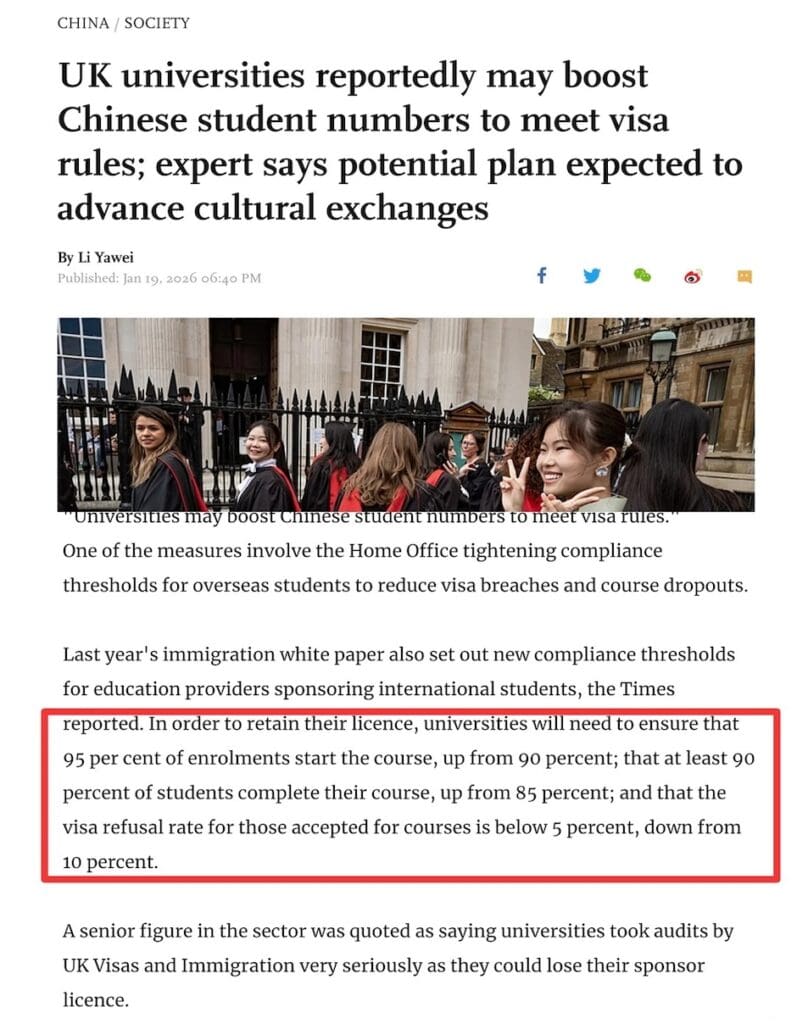


There are many reasons that the UK remains an attractive destination and application numbers remain high – with command of the English language a valuable skill, Chinese cities offering fast-track Hukou (residence permit) schemes for graduates from Top 100 universities, shorter and therefore more cost-effective courses at both undergraduate and postgraduate level, the perception of the UK as a safe country, and the strength of both Russell Group institutions and more widely in focused degree areas such as fashion and the arts. Social media platforms from Xiaohongshu to Douyin host a panoply of UK-based student content creators, sharing their experience of both living and studying in the UK, contributing to it being seen as a desirable, safe, and enjoyable place to be.
The market has changed, and UK institutions must clearly articulate their value to families, whether as a fast track to domestic employment or a viable route to living abroad. Other service providers to students – especially student housing providers – must consider some of the wider challenges facing their residents – from the common challenges of UK life such as dreary winter days, through to supporting cross-cultural integration. An increased focus on employability will also be key in proving value-for-money. Stronger communications both with existing residents, and marketing to prospective customers will only become more important as students consider a wider range of options than ever before.
In short, the era of simple, passive Chinese student recruitment is well and truly over. Student housing providers must work hand in glove with universities and partners to present a unified case for study abroad in the UK, targeting students further upstream in the decision-making process. Chinese students and their families need to know the practical value of a UK degree, combined with the quality of life and connections the student will enjoy in their lived environment once here.
TONG’s Takeaways:
- The traditional “Big Four” of the US, the UK, Australia and Canada remain top choices, but Chinese students are diversifying into Asian and European alternatives or choosing domestic universities.
- ROI increasingly drives decisions. For some, studying abroad is now a practical calculation based on money, time and employment prospects. Both housing providers and educational institutions must be alive to these expectations.
- The UK benefits from prestigious universities, shorter courses, and a strong reputation in many subject areas.
- A clear articulation of value is vital for all players in the industry, as the market becomes ever more competitive.